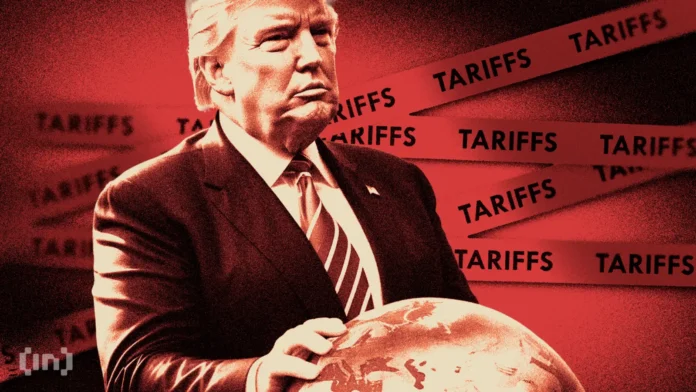
Donald Trump has announced a major trade deal with Thailand, promising lower US tariffs in exchange for greater access to the Thai market. But the agreement could create very different outcomes for investors.
Some Thai companies stand to gain from cheaper imports, while American exporters could win new business.
On Tuesday, Trump and Thai Prime Minister Anutin Charnvirakul signed a joint statement in Manila. Thailand subsequently announced that Washington had agreed to reduce its additional forced-labor tariff from 12.5% to 10%.
The reduction would bring Thailand in line with Malaysia and Indonesia. However, it has no implementation date, and the final agreement remains unfinished.
Which Stocks Could Benefit From Trump’s Thailand Deal?
The tariff cut could help Thai food and rubber exporters. However, computers, hard drives and semiconductors were already exempt.
In July, Kasikorn Securities identified Thai Union (TU), Sri Trang Agro-Industry (STA), KCE Electronics and Delta Electronics (DELTA) as potential beneficiaries.
Its latest assessment is more cautious, rating the deal neutral for Thailand’s stock market.
Still, the brokerage identified several potential winners:
- CPF, BTG and GFPT: Cheaper American corn could increase earnings by 1%–3%.
- BDMS, Bumrungrad (BH) and Praram 9 (PR9): Lower import costs for American medicines and medical equipment could improve margins.
American agricultural exporters also stand to benefit from Thailand’s proposed $2.6 billion in annual purchases.
Boeing could benefit from an earlier commitment to purchase 80 US aircraft worth $18.8 billion.
Why Investors Remain Cautious
Trump declared:
“Thailand will eliminate all tariffs on US exports.”
Thai officials say existing tariffs remain until the agreement takes effect. Domestic farmers also face potential competition from American imports.
Meanwhile, Thailand’s SET Index fell 1.66% on Tuesday, amid concerns over separate US chip export restrictions.
Investors now await the final tariff schedule and details of Thailand’s import commitments. A separate US investigation into excess manufacturing capacity could introduce further tariffs, leaving exporters facing additional uncertainty.