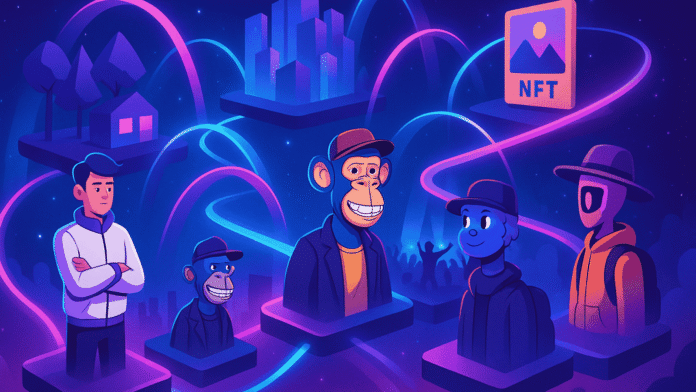
The metaverse hype may have cooled from its 2021 fever pitch, but behind the scenes, something much bigger—and far more important—has been quietly taking shape. In 2025, the promise of interoperable metaverses is finally being delivered.
That means digital worlds no longer operate as isolated silos. Avatars, assets, identities, and economies can now move freely between platforms. You can buy an outfit in one world, wear it in another, and use the same wallet and credentials throughout. It’s not science fiction—it’s happening right now.
But the road to metaverse interoperability hasn’t been smooth. So who’s actually making it work? And what are the projects, standards, and protocols leading the charge?
From Walled Gardens to Open Ecosystems
Early metaverse platforms — whether centralized like Meta’s Horizon or blockchain-native like Decentraland — were largely self-contained. Each had its own economy, avatars, login systems, and digital goods. Users might own a skin or piece of land in one world, but it was stuck there.
That model limited growth. Developers were locked into specific platforms. Users couldn’t take their assets with them. And value, instead of being portable, was trapped.
The idea of interoperability promised something better: a way to connect worlds, merge economies, and build a truly open metaverse. In 2025, we’re finally seeing that vision become real.
Key Drivers of Metaverse Interoperability
Three major breakthroughs have made metaverse interoperability possible this year:
1. Universal Identity Standards
Thanks to decentralized identity systems like Polygon ID, World ID, and ENS, users can now maintain a single identity across platforms. Avatars, achievements, and credentials can follow you — no matter which world you’re in.
2. NFT Portability Protocols
Standards like ERC-6551 (token-bound accounts) and ERC-721x enable NFTs to carry metadata, attachments, and programmable logic. That means an NFT representing a sword, wearable, or house can retain functionality across multiple games or worlds.
3. Cross-World Rendering Engines and Asset Translation
Projects like Ready Player Me and Metaverse Standards Forum are solving the hardest technical challenge: rendering avatars and objects consistently across different engines and styles. They’re building bridges so that the same 3D asset can work in Unreal, Unity, WebGL, and more.
With these layers in place, we’ve moved beyond metaverse islands — into a mesh of interconnected, user-driven digital spaces.
Who’s Leading the Interoperability Push?
Ready Player Me
This avatar platform has become the default identity layer for many metaverse games and virtual worlds. Users can create a single avatar and use it across hundreds of environments. In 2025, it’s expanded into wearable NFTs, cross-game achievements, and wallet integration.
The Sandbox
Originally a self-contained world, The Sandbox is now integrating bridges to other ecosystems. Its avatars and NFTs can move into partner platforms like Decentraland and Mona, and it supports ERC-6551 for composable NFT-based assets.
Webaverse
Focused on building a metaverse that works entirely in the browser, Webaverse is committed to open standards and self-hosted worlds. Its asset registry and wallet infrastructure support full interoperability — with no walled gardens.
Monaverse
Known for its user-generated 3D environments and virtual galleries, Mona has embraced cross-world support for NFT-based architecture, art, and wearables. It’s one of the most creator-friendly metaverse builders in 2025.
Yuga Labs
The company behind Bored Ape Yacht Club is making interoperability central to its Otherside metaverse. Avatars from different collections — not just Yuga’s own — are welcome, and its developers are collaborating on cross-metaverse SDKs with other Web3 teams.
Interoperability Isn’t Just Technical — It’s Economic
When digital assets can move between worlds, new economic models emerge.
A wearable bought in The Sandbox can be rented for an event in Decentraland. A music venue built in Mona can host a performance streamed into Spatial. Token-gated events, real-time royalties, and on-chain affiliate systems are now being layered on top of these connections.
We’re seeing the rise of inter-metaverse economies, where creators no longer build for one platform — they build for a network. Interoperability multiplies the reach and revenue potential of each asset.
DAOs and Governance Across Worlds
Another benefit of interoperability is governance coordination. Communities that once lived only in Discord can now host events, meetings, and collaborations across metaverses — while retaining the same DAO infrastructure.
Tools like Snapshot, Tally, and Zora’s protocol-based marketplaces now integrate directly into 3D spaces. You can vote on a proposal in a virtual chamber, then spin up a project across multiple worlds — using the same identity, treasury, and reputation system throughout.
This makes DAOs not just more visual, but more functional. They no longer have to choose a home — they can operate across the entire open metaverse.
Challenges That Still Remain
Despite major progress, metaverse interoperability is still early — and far from seamless.
- Asset compatibility: Even with standards like GLTF and USD, many assets still require conversion or reformatting to move between engines.
- Licensing and IP: Not all asset creators want their NFTs used across worlds. Permissions, royalties, and usage rights are still evolving.
- Performance and rendering: Not every platform can handle complex, high-fidelity assets from other ecosystems. Lightweight, adaptive rendering remains a work in progress.
- User experience: Connecting wallets, switching platforms, and syncing avatars still involves too many steps for mainstream users.
Still, these challenges are being worked on — and the momentum is clear.
Final Thoughts
Interoperable metaverses are no longer a distant goal. They’re here — messy, evolving, and very real.
In 2025, the metaverse is becoming a network, not a destination. The winners aren’t those who wall off users and assets, but those who build the bridges — the identity layers, asset protocols, and rendering tools that make the open metaverse work.
And as more users, creators, and builders adopt these standards, the metaverse stops being a product — and starts becoming a protocol.